Introduction
Many policyholders eventually hit a wall with their life insurance. Premiums climb past what the budget allows, the kids are grown and the mortgage is paid off, or a medical bill lands that needs cash now, not decades from now.
That's usually the moment a "buyout" enters the conversation.
This topic has picked up steam for a reason. The U.S. population aged 65 and older hit 61.2 million in 2024, up 3.1% in a single year, and long-term care costs are climbing right alongside it.
A private nursing home room now runs a median of $127,750 a year, according to a 2024 Genworth and CareScout cost-of-care survey.
This article breaks down what a life insurance buyout actually is, the four main paths available, and how to figure out which one (if any) fits your situation.
Key Takeaways
- A buyout trades your policy for cash instead of continued premiums or a lapse
- Options include life settlements, viatical settlements, cash surrender, and accelerated death benefits
- Payouts often beat cash surrender value by a wide margin, but decisions are usually permanent
- The right choice hinges on age, health, policy type, and future coverage needs
- Working with a licensed professional can help you avoid leaving money or protection on the table
What Is a Life Insurance Buyout?
A life insurance buyout is a transaction where you give up ownership of your policy, or its future benefits, in exchange for a lump-sum cash payment while you're still alive. The buyer, whether a life settlement company, an investor, or your own insurer, takes over premium payments and eventually collects the death benefit.
This is different from a normal death benefit payout. A standard payout only reaches beneficiaries after the insured passes away. A buyout puts money in your hands now, while you're still around to use it.
People typically explore a buyout when:
- The policy is no longer needed (kids are independent, debts are paid off)
- Premiums have become unaffordable
- Immediate funds are needed for expenses like long-term care or medical bills
One important detail: buyouts are regulated at the state level, so eligibility rules, required disclosures, and consumer protections vary depending on where you live.
A licensed agent can walk you through how a buyout compares to keeping your existing coverage or restructuring it instead of selling it outright. Agents at GFI × Team OOC, for instance, are licensed in all 50 states and can help you navigate these state-specific rules.

Types of Life Insurance Buyout Options
"Buyout" isn't one single product. It covers several distinct paths, and each comes with its own eligibility rules, payout ranges, and trade-offs. The right one depends heavily on your age, health, policy type, and what you actually need the money for.
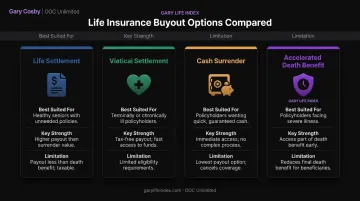
Life Settlement
A life settlement means selling a permanent life insurance policy (whole, universal, or convertible term) to a third-party buyer for a cash sum greater than the surrender value.
- Best suited for: Policyholders generally 65 or older who no longer need or can't afford their coverage. Industry guidance often points to policies with larger face values, though there's no universal legal minimum.
- Key strength: Payouts run far higher than surrendering to the insurer. LISA's 2024 data found settlements averaged 6.5 times the surrender value, about $223,000 more per consumer.
- Limitation: It's irreversible once the sale closes. Fees or commissions may apply, and the proceeds can carry tax consequences depending on your cost basis and gain.
Viatical Settlement
A viatical settlement works similarly to a life settlement but is designed for people diagnosed with a qualifying terminal or chronic illness, regardless of age.
- Best suited for: Anyone facing a shortened life expectancy who needs funds sooner rather than later for medical care, debt, or quality-of-life expenses.
- Key strength: Payouts tend to land closer to the full death benefit, since the buyer expects to collect on the policy in a shorter timeframe.
- Limitation: The process can be emotionally difficult, and proceeds may be taxed differently than a standard life settlement depending on the illness and structure.
Cash Surrender
Surrendering a policy means handing it back directly to the issuing insurer in exchange for its accumulated cash value, minus any surrender charges.
- Best suited for: Policyholders who want a fast, simple exit without a third-party buyer or medical underwriting.
- Key strength: Speed and simplicity. There's no outside qualification process involved.
- Limitation: Surrender values are usually much lower than what a life settlement or viatical settlement would pay for the same policy.
Accelerated Death Benefit
This option, often built in as a policy rider, lets you access a portion of your death benefit early if you're diagnosed with a qualifying terminal or critical illness.
- Best suited for: Policyholders who want to keep their policy intact but need partial funds now due to a serious diagnosis.
- Key strength: No sale to an outside party is required, so remaining benefits stay in place for beneficiaries.
- Limitation: The accelerated amount reduces the final death benefit, and eligibility depends entirely on your specific rider terms.
How to Choose the Right Buyout Option
The "right" option depends on your actual circumstances, not just which one pays the biggest number upfront. A few factors matter more than the headline figure:
- Age and health status: This alone determines whether you'd even qualify for a life settlement, a viatical settlement, or whether simple surrender is your only real path.
- Current and future financial need: Are you covering an immediate expense like medical care or debt, or planning for something further out? The timeline shapes which option makes sense.
- Whether coverage is still needed: If dependents, a mortgage, or estate planning still rely on that death benefit, selling or surrendering the whole policy might not be the answer. An accelerated benefit rider could preserve more of what's left.
- Tax consequences: Proceeds can be taxed differently depending on the structure and your cost basis. This is a spot where a tax professional's input is worth the time.
- Comparing multiple offers: Payout amounts vary significantly between buyers. Working with a licensed, multi-carrier agent, such as those at GFI × Team OOC, gives you access to 25+ A+ rated carriers and a clearer view of what's actually available before you commit.
There's no shortcut here. Rushing toward the biggest check on the table without weighing these factors is how people end up regretting the decision a few years later.
What to Check Before Finalizing a Buyout
Before signing anything, slow down and check a few things that are easy to overlook when a big number is on the table.
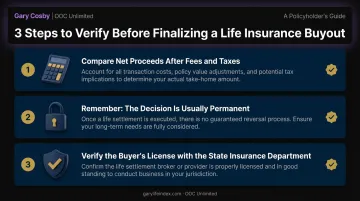
- Look past the headline offer. Compare net proceeds after fees, commissions, and taxes, not the raw number a buyer quotes first.
- Remember it's usually permanent. Once a policy is sold or surrendered, it typically can't be reinstated.
- Verify the buyer's license. State insurance departments can quickly confirm whether the settlement company or broker is licensed and in good standing before you sign anything.
A quick conversation with a licensed agent before finalizing anything can catch issues that a settlement company, which is financially motivated to close the deal, isn't going to flag for you.
Conclusion
A life insurance buyout can turn coverage you no longer need or can't afford into cash you can use right now. But the options aren't interchangeable. Life settlements, viatical settlements, cash surrender, and accelerated death benefits each come with different eligibility rules, payout sizes, and levels of permanence.
Weighing these against your health, age, and financial goals, with a licensed OOC Unlimited agent guiding you, is how you land on the outcome that actually serves you best.
Frequently Asked Questions
What is buy-out insurance?
Buy-out insurance refers to selling or surrendering a life insurance policy for a lump-sum cash payment instead of keeping it in force or letting it lapse. Common forms include life settlements and cash surrender.
Can you buy out your insurance policy?
Not exactly. You can't buy out your own policy, but you can sell it to a third party through a life settlement or surrender it to the insurer for cash value, depending on eligibility.
What is the difference between buy-in and buy-out?
In life insurance terms, a buy-in means the policy stays in place as an asset while you retain some responsibility. A buy-out, by contrast, fully transfers ownership and all future obligations to the insurer or buyer.
Is a life insurance buyout taxable?
Proceeds can be partially taxable, depending on the amount received versus the premiums you've paid over the life of the policy. A tax professional should review your specific numbers.
How much money can I get from a life insurance buyout?
Payouts vary based on policy type, face value, health, and life expectancy. They're typically higher than cash surrender value but lower than the full death benefit.
What happens to my policy after a buyout?
Ownership transfers to the buyer in a settlement, or the policy terminates entirely in a surrender. Either way, you no longer hold future death benefit rights or premium obligations.