A top salesperson, operations lead, or senior manager can be difficult to replace, and a standard cash bonus may not feel like enough. A Section 162 executive bonus plan gives the business another option: it pays bonus compensation that funds a permanent life insurance policy owned by the employee. The employee chooses the beneficiary and generally pays tax on the bonus. The business may be able to deduct the compensation when IRC Section 162 requirements are met, but its CPA should confirm the treatment before implementation.
Key Takeaways
- A Section 162 executive bonus plan uses employer-paid bonus compensation to fund a permanent life insurance policy owned by the employee.
- The employee owns the policy, chooses the beneficiary, and generally keeps the policy if employment ends. A properly structured REBA may temporarily restrict specified policy rights.
- The bonus is generally taxable to the employee and may be deductible to the business when the applicable compensation requirements are satisfied.
- A Restricted Executive Bonus Arrangement may limit specified policy rights until agreed vesting conditions are met.
What is a Section 162 Executive Bonus Plan?
A Section 162 executive bonus plan is a compensation arrangement, not a separate type of life insurance. It takes its name from IRC Section 162, which addresses when ordinary and necessary business expenses, including reasonable compensation, may be deductible.
Under the arrangement, a business provides bonus compensation that is used to fund a permanent life insurance policy for a selected employee. Unlike a qualified retirement plan, it generally does not require the employer to offer the benefit across the workforce. The employer can decide who participates and how much bonus compensation each participant receives.
The tax result is not automatic. Whether the business can deduct the bonus depends on the employee’s compensation, services, and the company’s specific circumstances.
At a glance
| Question | Answer |
|---|---|
| Who pays the bonus? | The employer |
| Who owns the policy? | The employee from the outset |
| Who chooses the beneficiary? | The employee |
| Who generally pays tax on the bonus? | The employee |
| Is the bonus automatically deductible? | No |
| Who confirms the tax treatment? | The business’s CPA or tax advisor |
How Does a Section 162 Plan Work?
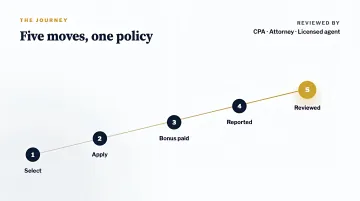
A Section 162 plan usually comes together in five steps:
- The business selects the employee: The employer decides who will participate and how much bonus compensation it plans to provide. Participation may be limited to one employee or a selected group.
- The employee applies for the policy: The employee applies for a permanent life insurance policy and owns it from the start. Coverage remains subject to the insurance carrier’s underwriting requirements.
- The employer pays the bonus: The business may pay the bonus to the employee or send the amount directly to the insurance carrier. Paying the carrier directly helps ensure the money funds the policy, but it does not make the business the policy owner.
- The employee reports the compensation: The bonus is generally treated as taxable income to the employee. When the employer adds another amount intended to offset some or all of the estimated tax cost, it is commonly called a gross-up or double bonus.
- Each professional handles their part: The business’s CPA or tax advisor reviews the tax treatment and possible deduction. An attorney reviews any agreements or restrictions. A licensed life insurance agent helps with the insurance funding and explains the policy’s costs, features, and limitations.
Before proceeding, both sides should understand their tax responsibilities, what happens if bonus payments stop, and how the policy may be affected.
Section 162 Plan vs. Key Person Insurance: Which Business Problem Are You Solving?
Both arrangements involve a business and life insurance, but they serve different purposes. A Section 162 executive bonus plan provides a benefit to a selected employee. Key person insurance protects the business against the financial impact of losing someone critical to its operations.
The difference starts with ownership. Under a Section 162 arrangement, the employee owns the policy and chooses the beneficiary. With key person insurance, the business generally owns the policy, pays the premiums, and receives the proceeds.
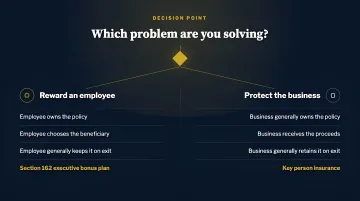
| Question | Section 162 executive bonus plan | Key person insurance |
|---|---|---|
| Primary purpose | Reward or provide a benefit to a selected employee | Protect the business against the loss of a critical person |
| Policy owner | Employee | Generally the business |
| Who pays? | Business pays bonus compensation | Business pays the premium |
| Beneficiary | Chosen by the employee | Generally the business |
| Who receives the main financial protection? | Employee and chosen beneficiaries | Business |
| What happens if the employee leaves? | Employee generally keeps the policy | Business generally retains its policy |
This distinction matters because choosing the wrong arrangement can leave the business without the protection it expected. An owner who wants money available to manage lost revenue, recruit a replacement, or stabilize operations after a key person’s death is addressing a company-protection need. An owner who wants to provide a personally owned benefit to a valued employee is addressing a compensation need.
The practical rule: When the goal is rewarding the employee, a Section 162 arrangement may be relevant. When the goal is protecting the company, key person insurance addresses a different need.
Single Bonus vs. Gross-Up Bonus
The difference between these two structures is who absorbs the employee’s tax cost. In both cases, the business provides bonus compensation that funds the life insurance premium. The choice affects the employer’s total cost and the employee’s out-of-pocket responsibility.
Single bonus
With a single bonus, the employer pays an amount intended to cover the policy premium. The bonus is generally treated as taxable compensation, so the employee usually pays the related income tax using personal funds.
This approach costs the business less than a gross-up, but the employee should understand that the premium may be covered while the tax is not.
Gross-up bonus
With a gross-up, sometimes called a double bonus, the employer adds another amount intended to offset some or all of the employee’s estimated tax cost. Despite the name, the total bonus is calculated; it is not automatically twice the premium.
A gross-up can reduce the employee’s expected out-of-pocket cost, but it does not guarantee a particular tax result. Actual liability depends on the employee’s circumstances, so the business and employee should have their tax professionals review the structure.
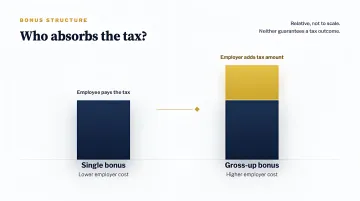
| Decision | Single bonus | Gross-up bonus |
|---|---|---|
| Premium amount funded by employer | Yes | Yes |
| Additional estimated tax amount funded | No | Yes |
| Employee’s final tax outcome guaranteed | No | No |
| Employer cost | Lower relative to gross-up | Higher relative to single bonus |
| CPA review required | Yes | Yes |
What May Be Deductible Under Section 162—and What Is Not?
A common mistake is to assume that Section 162 makes a life insurance premium automatically deductible. It does not. The tax question starts with the bonus as compensation, not with the policy it funds.
The possible deduction relates to compensation
IRC Section 162 addresses deductions for qualifying ordinary and necessary business expenses, including reasonable compensation for services actually rendered. In an executive bonus arrangement, the business may be able to deduct the bonus as compensation. It is not automatically deducting the premium for a personally owned life insurance policy.
Reasonable compensation matters
Federal compensation regulations require compensation to be reasonable and genuinely paid for services. The business should therefore be able to support why the bonus is appropriate for the employee’s actual work and overall compensation. What is reasonable depends on the facts and circumstances, so the business’s CPA should review the proposed bonus.
The employee generally recognizes income
The bonus is generally treated as taxable compensation to the employee, including when the business sends the payment directly to the insurance carrier. A gross-up may be intended to offset some or all of the estimated tax cost, but it does not remove the employee’s tax obligation or guarantee a final result.
Entity type and ownership matter
Tax treatment can change based on the company’s entity type, the participant’s ownership and employment status, and the way the arrangement is structured.
Before moving forward, the business’s CPA should confirm the tax treatment for the specific company and participant. Gary helps with the life-insurance funding and works alongside the business owner’s CPA and attorney.
What Happens If Circumstances Change?
A Section 162 arrangement may begin as an employee benefit, but the business owner should also understand what happens when employment, funding, or policy use changes.
The employee leaves the company
Because the employee owns the policy, they generally keep it after leaving the business. The employer can usually stop future bonus payments, but it does not automatically regain the policy or its value. The employee must then decide whether to continue funding the policy or allow it to lapse, based on the policy’s terms, premium requirements, and available values.
The employer stops providing the bonus
Ending the bonus does not transfer ownership back to the business. Whether the policy can remain in force depends on its premium requirements, available policy value, charges, and other contract terms. Neither the employer nor the employee should assume the policy will continue unchanged without reviewing the carrier-issued policy and illustration.
The employee dies while the policy is in force
The employee’s named beneficiary generally receives the applicable death benefit, subject to the policy terms. Any guarantees depend on the claims-paying ability and financial strength of the issuing insurance carrier.
The employee accesses cash value
Permanent life insurance may allow access through withdrawals or policy loans. Both can reduce cash value and the death benefit. Loans accrue interest, and an underfunded policy or lapse may create tax consequences. A Restricted Executive Bonus Arrangement may also limit access to loans, withdrawals, surrender, or other policy rights until its conditions are met.
The employer wants its contributions back
A standard Section 162 arrangement does not make the employer the policy owner or beneficiary simply because it paid the bonuses. If the business expects to recover its contributions, retain control, or receive the death benefit, it may be considering a different business need or arrangement.
Practical point: Ownership should be settled before funding begins. Once the employee owns the policy, the employer’s control is limited unless properly structured restrictions apply.
When the Employer Wants Retention Restrictions
A standard Section 162 plan gives the employee ownership of the policy from the beginning. That may suit a business focused mainly on rewarding a valuable employee. It may be less suitable when the employer also wants the benefit to encourage the employee to stay.
A Restricted Executive Bonus Arrangement, or REBA, adds a restrictive endorsement or vesting arrangement to the employee-owned policy. The restriction may temporarily limit specified rights, such as:
- Accessing the policy’s cash value
- Taking policy loans
- Surrendering the policy
- Changing the beneficiary
- Making other ownership changes covered by the agreement
The employee still owns the policy, but the restricted rights become available only after the agreed conditions are satisfied. This gives the employer a way to connect access to the benefit with a retention objective rather than providing unrestricted control immediately.
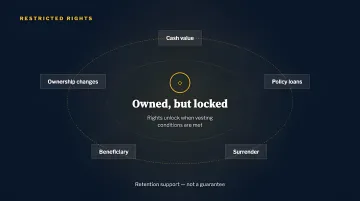
The employer and employee should have the agreement and restrictive endorsement reviewed by the appropriate professionals. An attorney should review the legal terms, while the business’s CPA or tax advisor should confirm the tax treatment.
A REBA may support retention, but it does not guarantee that an employee will remain with the company.
Eight Decisions to Make Before Offering a Section 162 Plan
Before discussing policy options, the business should settle the decisions that determine whether the arrangement will work for both sides.
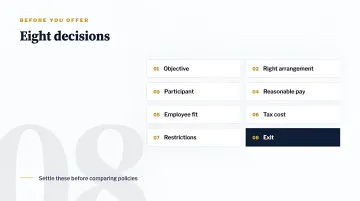
1. What is the business trying to accomplish?
Start with a specific objective. Is the business trying to reward a proven employee, strengthen a recruitment offer, encourage someone to stay, or combine those goals? Without a clear purpose, it is difficult to decide how much control the employee should receive or whether restrictions are appropriate.
2. Is Section 162 the correct arrangement?
A Section 162 plan provides an employee-owned benefit. It does not primarily protect the company. If the business wants to receive funds after the death of a critical employee, key person insurance may address that need more directly.
3. Who should participate?
Identify the employee or owner-employee being considered and why the additional benefit is appropriate. The employer can select participants, but the decision should connect to a genuine compensation, recruitment, or retention objective.
4. Is the compensation appropriate?
The business should review the proposed bonus alongside the employee’s duties, performance, responsibilities, and total compensation. A potential deduction depends partly on whether the compensation is reasonable under the company’s specific circumstances.
5. Does the employee value the benefit?
Permanent life insurance may not appeal to every employee. Before proceeding, confirm that the employee understands that they will own a life insurance policy, choose the beneficiary, and generally recognize the bonus as taxable compensation.
6. Who will bear the estimated tax cost?
With a single bonus, the employee generally pays the related tax using personal funds. A gross-up adds compensation intended to offset some or all of that estimated cost. The employer should understand the additional expense, and the employee should not assume a guaranteed tax outcome.
7. Does the business want restrictions?
A standard arrangement generally gives the employee control from the outset. If retention is a major objective, the business may want to review a Restricted Executive Bonus Arrangement that limits specified policy rights until agreed conditions are met.
8. What happens if the arrangement ends?
Both sides should discuss what happens if the employee leaves or the employer stops paying bonuses. The employee generally keeps the policy and must decide whether to continue funding it. The business should not expect to recover its payments unless a different arrangement has been properly structured.
| Decision | Responsible professional |
|---|---|
| Tax treatment and potential deduction | CPA or tax advisor |
| Agreement and restrictive provisions | Attorney |
| Life insurance policy and funding | Licensed life insurance agent |
These decisions should be resolved before the business compares policies or relies on projected values.
Is a Section 162 Executive Bonus Plan Worth Exploring?
A Section 162 plan may be worth discussing when the business wants to provide a selected employee with a personally owned benefit and accepts that the employee will control the policy. Before proceeding, the employer should decide whether retention restrictions are needed and involve its CPA and attorney where appropriate.
A different arrangement may be more suitable when the business wants to own the policy, receive the death benefit, protect itself from financial loss, or recover its payments. No decision should depend on a guaranteed deduction, cash value, or tax outcome.
The starting question is simple: Is the arrangement meant to benefit the employee or protect the business?
Frequently Asked Questions
Is a Section 162 executive bonus plan automatically tax-deductible?
No. The business may be able to deduct the bonus as compensation when it qualifies as reasonable, ordinary, and necessary under its specific circumstances. The deduction does not arise simply because the bonus funds life insurance. The business’s CPA or tax advisor must review the arrangement and confirm the appropriate treatment.
Can an employer choose which employees participate?
Yes. A Section 162 arrangement generally allows the employer to select one employee or a limited group rather than offering the benefit across the entire workforce. The business can also decide the bonus level for each participant. Those decisions should reflect a legitimate compensation, recruitment, or retention objective.
Who owns the policy in a Section 162 arrangement?
The employee owns the permanent life insurance policy from the outset, chooses the beneficiary, and generally controls the contract. The employer’s payment of the bonus does not make the business the policy owner. Certain rights may be temporarily limited when the arrangement includes a properly structured restrictive endorsement.
What happens to the policy if the employee leaves?
The employee generally keeps the policy because they own it. The employer can normally stop future bonus payments, leaving the employee to decide whether to continue funding the policy. Available options depend on the policy’s terms, premium requirements, accumulated value, charges, and any restrictions established through a REBA.
What is the difference between a single bonus and a gross-up?
With a single bonus, the employer provides compensation intended to cover the policy premium, while the employee generally pays the related tax. A gross-up includes an additional amount intended to offset some or all of the estimated tax cost. Neither structure guarantees the employee’s final tax outcome.
Is a Section 162 plan the same as key person insurance?
No. A Section 162 plan provides an employee-owned benefit intended to reward or retain a selected employee. Key person insurance generally protects the company: the business owns the policy and receives the proceeds. The correct arrangement depends on whether the primary goal is employee compensation or business protection.
Can an owner acting as an employee participate?
An owner who also works as an employee may be able to participate, but the tax treatment depends on the company’s entity type, ownership structure, compensation arrangement, and individual circumstances. The owner should not assume that the arrangement produces a particular deduction or tax advantage without review by their CPA or tax advisor.
Is a Section 162 plan a qualified retirement plan?
Generally, no. It is a compensation arrangement that funds an employee-owned life insurance policy, rather than a qualified retirement plan. It is therefore generally not subject to the same contribution limits, nondiscrimination testing, or IRS preapproval requirements. The business should still obtain tax and legal guidance for its specific arrangement.
Conclusion: Start With the Business Decision
A Section 162 plan should begin with the business decision, not the policy. Identify who you want to reward, whether the employee should have immediate control, and whether a single bonus, gross-up, or retention restriction fits the objective. Gary Cosby is a licensed life insurance agent, licensed in all 50 U.S. states. We help with the life-insurance funding and work alongside your CPA and attorney. You can schedule a conversation with Gary to discuss the business objective and the insurance-funding component.
Important Disclosures
- This content is for general educational purposes only and is not tax, legal, accounting, or investment advice. Consult your own CPA / tax advisor and attorney before implementing any strategy.
- Gary Cosby is a licensed life insurance agent, licensed in all 50 U.S. states. He is not a financial planner, financial advisor, tax advisor, attorney, or certified business valuation professional, and these pages do not provide tax planning, legal, or valuation services.
- Any guarantees — including index floors, riders, and death benefits — are subject to the claims-paying ability and financial strength of the issuing insurance carrier.
- Life insurance policies contain fees, charges, cost of insurance, and limitations; policy loans and withdrawals reduce cash value and the death benefit and may cause the policy to lapse, which can result in tax consequences.
- Cash value generally accumulates on a tax-deferred basis; the tax treatment of distributions depends on the policy's status (including whether it is a modified endowment contract) and your individual circumstances.
- Indexed crediting is non-guaranteed and subject to caps, participation rates, and other carrier-set factors that may change; hypothetical or past index performance does not predict or guarantee future results.
- Any figures, examples, or illustrations are hypothetical, are not a promise of future results, and any policy-specific values must come from a personalized illustration issued by the carrier.
- Buy-sell agreements and other contracts must be drafted by a licensed attorney; business valuations must be performed by a qualified valuation professional. Nothing here constitutes a certified business valuation or a legal document.
- Deductibility of premiums or bonuses under IRC Section 162 depends on the bonus qualifying as reasonable, ordinary and necessary compensation and on your specific facts; confirm any deduction with your tax advisor.
- Accelerated death benefit / living benefit riders are optional, are subject to eligibility requirements and policy terms, reduce the death benefit when used, and may have tax implications; availability varies by policy and state.
- Product availability, features, and provisions vary by carrier and by state and are subject to underwriting; not all applicants will qualify.
- This material is not affiliated with, endorsed by, or sponsored by the IRS, any government agency, or any individuals named in any examples.