
That's the misconception worth correcting first. Succession planning isn't only about eventually stepping down — it's about protecting a business from death, disability, and unplanned exits that can happen tomorrow.
This guide walks through the strategies, legal tools, and financing options Arizona business owners need to keep their companies running no matter what happens to the person currently running them.
Key Takeaways
- Nearly half of all business owner exits are involuntary, triggered by death, disability, or other unplanned events
- 706,640 small businesses in Arizona employ 42.6% of the workforce, so continuity planning is a statewide economic priority
- A written plan needs three layers: successor development, legal documentation, and funding (often life insurance)
- Arizona's intestacy laws won't protect your business the way a buy-sell agreement or trust can
- Family businesses should start planning 5-10 years before an anticipated transition
Why Business Succession Planning Matters in Arizona
Arizona's economy runs on small and closely held businesses. The SBA's 2025 state profile counts 706,640 small businesses—99.5% of all Arizona businesses—employing 1.2 million people, or 42.6% of the state's workforce (SBA's 2025 Arizona State Profile).
When one of those businesses loses its owner or key leader without a plan, the damage spreads to employees, families, and the local economy.
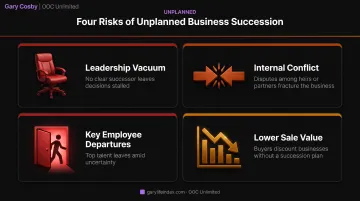
Skip succession planning and you're gambling with:
- Leadership vacuums that stall decisions when speed matters most
- Internal conflict among family or partners over who is in charge
- Key employee departures when people will not wait out the uncertainty
- Lower sale or transfer value when the deal happens under duress, not on your terms
Those same risks shape how employees, clients, lenders, and partners view the company. A written succession plan signals that the business can survive a transition—not that it is one bad day from collapse.
According to the Exit Planning Institute's 2023 National State of Owner Readiness report, 69% of owners now list an exit strategy as a priority—up from 6% a decade ago. More Arizona owners see the need; far fewer have a funded, documented plan ready to run.
Key Strategies for Building a Business Succession Plan
A solid plan rests on three pillars: who takes over, what the business is worth, and how often you revisit the plan.
Identifying and Preparing Successors
Start by listing the roles that would create a genuine operational gap if the person left tomorrow — not just the owner's chair, but any role holding critical relationships, technical knowledge, or licensing.
For each role, weigh internal versus external succession:
- Internal candidates: Evaluate skills, leadership potential, and cultural fit. Someone who's been with the business for years often understands its clients and quirks better than any outside hire could.
- External hires or sale: Sometimes no internal candidate is ready. Bringing in outside leadership, or planning an eventual sale, may better serve the business's long-term health.
Once you've identified a likely successor, don't just hand them a title. Set up a mentorship arrangement where the current leader works alongside them for months or years, transferring institutional knowledge gradually rather than all at once during a crisis.
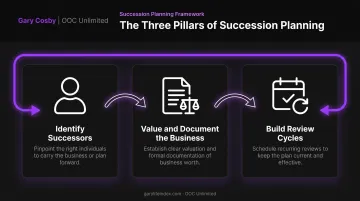
Valuing and Documenting the Business
You can't plan a fair transition without knowing what the business is worth. A professional valuation grounds buy-sell pricing, tax planning, and negotiations between family members or partners in actual numbers instead of guesswork. Pair that number with a funding method—often life insurance on the owners or key partners—so a buyout does not drain operating cash when a trigger event hits.
Beyond the valuation, document the knowledge that lives only in the owner's head:
- Organizational charts showing who reports to whom
- Process manuals for core operations
- Client relationship histories and key contacts
- Vendor agreements and renewal terms
Without this, a successor inherits a business on paper but not the operational muscle memory behind it.
Building in Flexibility and Review Cycles
A succession plan written once and filed away goes stale fast. Set an implementation timeline, then commit to reviewing it annually. Business growth, new family circumstances, or a successor's changed career path can all require adjustments. Update ownership stakes, successor designations, and valuation figures at each review so the plan still matches how the business actually runs.
Legal and Financial Tools to Protect the Transition
Strategy sets the direction. Legal and financial tools make it enforceable and fundable.
Buy-sell agreements are the backbone of most ownership transitions. They let co-owners or family members buy out a departing owner's interest under pre-agreed terms, triggered by events like death, disability, retirement, or a voluntary exit. Without one, a departing owner's heirs could end up as reluctant co-owners with people they've never met.
Life insurance commonly funds these agreements. It can:
- Provide liquidity for a buy-sell so remaining owners aren't forced to find cash fast
- Cover the financial hit of losing a key person whose knowledge or relationships drive revenue
- Give heirs cash instead of forcing them to sell the business just to cover expenses
Structuring key-person coverage or buy-sell funding correctly takes a licensed life insurance professional working with your CPA and attorney. Gary Cosby Jr., a licensed life insurance agent with OOC Unlimited, helps business owners identify insurance-funding options for key-person and business overhead expense needs.

Legal drafting and business valuation stay with the attorney and CPA on the team.
Trusts and powers of attorney matter just as much as the buy-sell itself. A durable power of attorney lets someone step in and manage the business immediately if the owner becomes incapacitated, with no waiting on a court proceeding while payroll goes unpaid.
Your succession plan should also live inside your broader estate plan:
- Integrate it with your will or living trust so business assets don't get tangled in probate
- Account for Arizona-specific entity laws for LLCs, partnerships, and corporations
- Work with an Arizona estate planning or business attorney so your agreements actually hold up
Arizona-Specific Legal Considerations for Business Owners
What happens if an Arizona business owner dies without a will? Arizona's intestacy laws, found in the Uniform Probate Code, determine who inherits — and the outcome may not match what you'd choose.
Under Arizona Revised Statutes § 14-2102:
- If all surviving children are also the surviving spouse's children, the entire estate passes to the spouse
- If some surviving children are not the spouse's children, the spouse gets only half of separate property and no interest in the decedent's half of community property
Arizona also applies a 120-hour survival rule under ARS § 14-2104. If the owner and an heir die within 120 hours of each other, the heir is treated as having predeceased the owner, absent clear evidence otherwise. That single rule can change who ends up holding business interests.
None of this names a business-ready successor. Intestacy just distributes assets by formula.
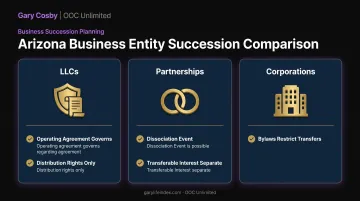
Entity structure matters just as much:
- LLCs: The operating agreement governs succession. Transferees typically get distribution rights only, not management rights, unless the agreement says otherwise
- Partnerships: Death is a dissociation event under Title 29. The transferable interest (profits, losses, distributions) stays separate from partnership status
- Corporations: Bylaws or shareholder agreements can restrict share transfers entirely
Review beneficiary designations and asset titling too. It's common for an LLC membership interest or life insurance policy to still list an outdated beneficiary years after the succession plan was updated—and that mismatch can override the plan.
Special Considerations for Family-Owned Businesses
Arizona family businesses carry an extra layer of complexity: history, sibling dynamics, and expectations that don't show up in an org chart. Clear employment policies, open communication, and a neutral third-party advisor help prevent disputes before they start.
A workable approach for family succession:
- Identify successors based on capability, not just birth order
- Draft governance documents — shareholder agreements, buy-sell terms, voting structures
- Formalize estate planning tools like trusts and powers of attorney
- Educate the next generation on both the business and the responsibilities of ownership
Buy-sell terms only protect the family when funding is in place. Life insurance is the most common way to make cash available when ownership changes hands.
The gap between intent and readiness is well documented. Family Business Center research shows 72% of family business owners want to keep the business in the family, yet only 34% have a robust succession plan in place, according to the Family Business Center's Family Business Facts report.
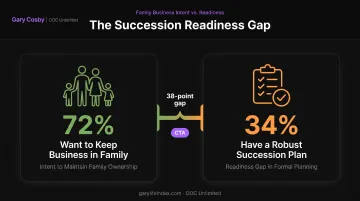
Fewer than half of owners planning to retire within five years have even chosen a successor. That gap is why most advisors push families to start 5-10 years before an anticipated transition.
It sounds like a long runway, but training a successor, drafting agreements, and building family consensus all take time you don't want to rush.
Frequently Asked Questions
Who inherits when there is no will in Arizona?
Arizona's intestacy laws under the Uniform Probate Code distribute assets based on marital and family status. Depending on whether children are shared with the surviving spouse, this can split business ownership in ways the owner never intended.
How do I plan for succession in a family business?
Identify capable successors and formalize buy-sell and shareholder agreements. Address valuation and tax questions early, and keep family stakeholders informed throughout the process.
What documents are essential for a business succession plan?
At minimum: a buy-sell agreement, an operating or shareholder agreement, a current business valuation, and estate planning documents such as a will or trust.
When should a business owner start succession planning?
Experts recommend 5-10 years before an anticipated retirement or ownership change. Planning for unexpected events like death or disability should start immediately.
Can life insurance help fund a business succession plan?
Yes. Life insurance can fund buy-sell agreements, provide liquidity for heirs, and cover the financial impact of losing a key person.
Do I need an attorney for business succession planning in Arizona?
Yes. An Arizona business or estate planning attorney helps ensure your agreements comply with state entity laws and hold up when ownership actually changes.