Many business owners default to whatever their agent or attorney suggests without understanding the long-term consequences. That's a problem. The 2024 Supreme Court ruling in Connelly v. United States just made this decision far more urgent, since it directly affects how entity-owned life insurance impacts estate tax exposure. This guide breaks down both structures so you can have an informed conversation with your CPA and attorney.
Key Takeaways
- Cross purchase has owners buy insurance on each other; entity purchase has the business own the policies
- Entity purchase is administratively simpler but may raise estate tax exposure post-Connelly
- Survivors get a basis step-up under cross purchase, but the structure gets messy past 3-4 owners
- Match the structure to owner count, entity type, and estate size
- Neither structure works without proper insurance funding, coordinated with your legal and tax team
Cross Purchase vs Entity Purchase: Quick Comparison
| Factor | Cross Purchase | Entity Purchase |
|---|---|---|
| Policies needed | n × (n-1): 6 owners need 30 policies | One policy per owner |
| Basis step-up | Yes, surviving owners get basis on purchased shares | No, remaining owners keep their original basis |
| Estate tax exposure | Proceeds go directly to owners, bypassing business valuation | Proceeds raise business value, increasing exposure under Connelly |
| Administrative load | High: age/health-based premium disparities complicate things | Low: business pays one set of premiums |
| Best for | 2-3 owners | 4+ owners |
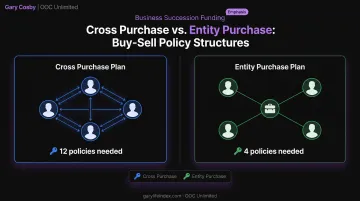
The math alone often decides this. A four-owner cross purchase needs 12 separate policies. An entity purchase needs four.
What Is a Cross Purchase Agreement?
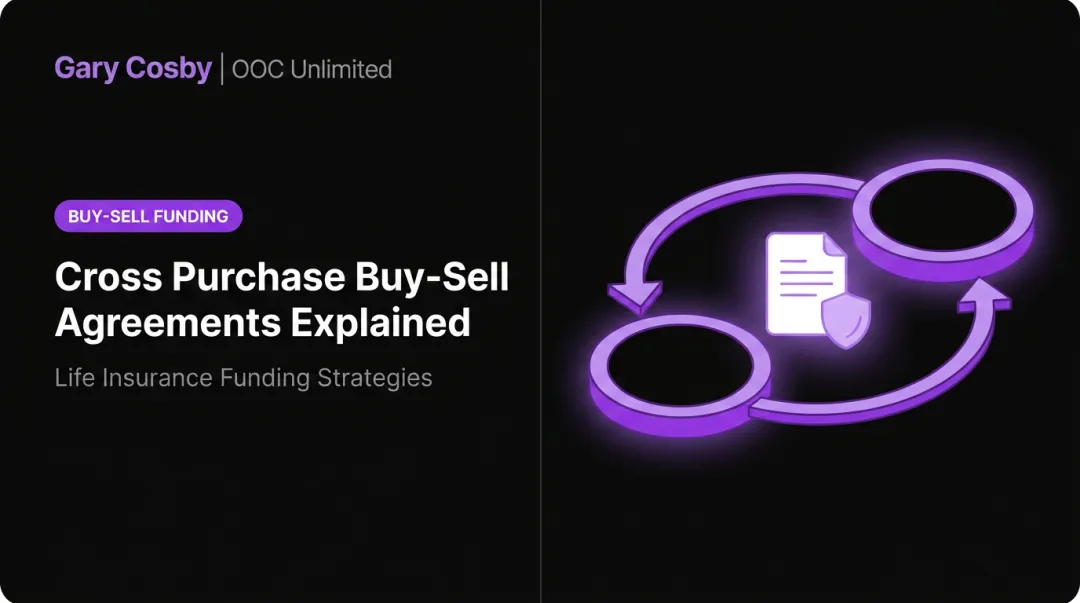
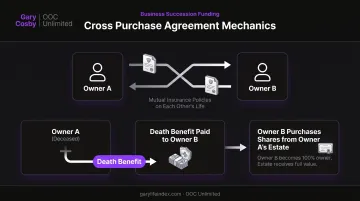
In a cross purchase agreement, each owner personally buys and owns a life insurance policy on every other owner. When a triggering event happens (death, typically), the surviving owners use their policy payouts to directly buy the deceased owner's shares.
The core benefit: surviving owners get a basis step-up on the shares they purchase. Per Thompson Coburn's analysis of buy-sell funding strategies, basis generally equals what the buyer pays under IRC 1012's cost rule. That reduces capital gains tax exposure when those owners eventually sell.
There's a second advantage that matters more since Connelly: because the insurance proceeds go directly to individual owners rather than the business, they're not included in the company's valuation. That sidesteps the estate tax trap entirely.
Use Cases of Cross Purchase
Cross purchase tends to fit small partnerships and family businesses best. Think two co-founders running a design agency, or a father-son plumbing business with two equal partners.
- Best fit: 2-3 owners of similar age and health
- How it plays out: Partner B collects the death benefit on A and buys A's shares from the estate. B's basis equals what B paid.
- The catch: Premiums swing hard with age and health. A 55-year-old insuring a 35-year-old pays far less than the reverse.
Equalization strategies (such as premium-sharing) often balance those gaps. Work out the mechanics with your insurance advisor for your specific ownership group.
What Is an Entity Purchase Agreement?
In an entity purchase agreement, the business itself owns the life insurance policies and is named as beneficiary on coverage for each owner. When an owner dies, the company collects the death benefit and uses it to redeem that owner's shares directly from the estate. The core benefit: simplicity. Instead of a web of cross-owned policies, you need just one policy per owner, regardless of how many partners you have. Per Goosmann Law's overview of entity purchase agreements, this centralized structure eliminates the age/health premium disparity headache entirely, since the business pays all premiums uniformly. The catch is significant. The Supreme Court's Connelly v. United States ruling changed the math here. The Court held that life insurance proceeds payable to a corporation increase that corporation's fair market value for estate tax purposes, and a contractual redemption obligation doesn't automatically offset that increase.
Use Cases of Entity Purchase
Entity purchase generally fits businesses where cross purchase's policy count becomes unmanageable.
- Best fit: 4+ owners, where n × (n-1) policies would create a logistical nightmare
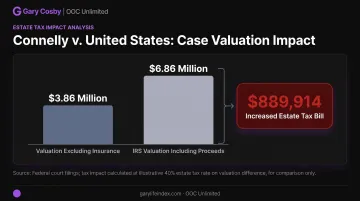
- Still viable when: each owner's total estate falls under the federal exemption threshold The Connelly case shows the tax risk in practice. Crown C Supply held a $3.5 million policy on each of its two shareholder brothers. When Michael died, Crown redeemed his shares for $3 million. An accounting firm valued the company at $3.86 million excluding the insurance proceeds. The IRS valued it at $6.86 million, which pushed Michael's estate tax bill up by $889,914. Smaller closely held businesses may still face little practical exposure. The IRS lists the federal estate tax exemption at $13,610,000 for 2024 and $13,990,000 for 2025, so estates under that threshold remain largely unaffected even after Connelly.
Cross Purchase vs Entity Purchase: Which Is Right for You?
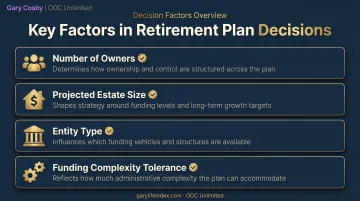
Four factors drive this decision:
- Number of owners — Fewer than four, cross purchase is usually workable. Four or more, entity purchase saves real administrative headaches.
- Projected estate size — If insurance proceeds that increase business value could tip an owner's estate over the federal exemption, cross purchase's estate-tax insulation matters more.
- Entity type — C-corps, S-corps, and LLCs each carry different basis and redemption rules; this needs a CPA's input specific to your structure.
- Funding complexity tolerance — Are you willing to manage multiple policies with varying premiums, or do you want one simplified system?
Quick guidance:
- Choose cross purchase if you have 2-3 owners and want basis step-up plus estate tax insulation
- Choose entity purchase if you have 4+ owners and administrative simplicity outweighs the Connelly estate-inclusion risk
There's also a middle path. A wait-and-see agreement delays the structural choice until a triggering event actually happens.
Under that setup, the business usually gets the first option to buy, remaining owners get a secondary option, and the company backstops any unpurchased interest. That flexibility adds drafting complexity, so walk through it with your legal and insurance advisors before you commit.
Whichever direction you lean, the funding vehicle needs to match the legal agreement. A mismatched policy structure can undo the tax planning your attorney built into the buy-sell document.
How OOC Unlimited Helps Business Owners Navigate This Decision
OOC Unlimited's licensed life insurance agents work alongside your CPA and attorney rather than replacing them. The division of labor is straightforward:
- Your attorney drafts the legally binding buy-sell agreement
- Your valuation professional determines what the business and each owner's interest are worth
- OOC Unlimited funds that agreement with the right life insurance structure
That funding role covers buy-sell agreements, key person coverage, and business overhead protection—whichever mix your situation needs.
With access to 25+ A+ rated carriers, including Prudential, Lincoln Financial, John Hancock, and Mutual of Omaha, agents can shop structures for either a cross purchase or entity purchase arrangement. You are not locked into one carrier's product line. Face amount, ownership, and premiums still follow the buy-sell structure your legal team recommends.
OOC Unlimited does not make the legal or tax call on which structure fits. Once your attorney and CPA decide, the agents build the insurance funding so the agreement can pay out as intended.
Frequently Asked Questions
What is the difference between cross purchase and entity purchase?
In a cross purchase, owners buy each other's shares and hold life insurance on one another. In an entity purchase, the business owns the insurance and redeems the departing owner's shares.
What are the key differences between an asset purchase and an entity purchase?
An asset purchase involves buying specific business assets, like equipment or inventory, rather than ownership shares. An entity purchase involves the business redeeming an owner's equity stake, keeping the underlying assets intact.
How does the Connelly v. IRS ruling affect my buy-sell agreement?
The ruling requires that life insurance proceeds received by a business under an entity purchase agreement be counted toward the business's value for estate tax purposes. A redemption obligation doesn't automatically offset that increase.
Can I switch from an entity purchase to a cross purchase agreement?
Switching is possible but complicated by transfer-for-value rules under IRC 101(a)(2), which can affect the tax-free status of death benefits. A special-purpose insurance LLC is one workaround worth discussing with your advisors.
Which agreement is better for a business with many owners?
Entity purchase is typically preferred for businesses with four or more owners because it requires just one policy per owner instead of the much larger web of policies a cross purchase requires.
Do I need a lawyer or CPA to set up either agreement?
Yes. Both structures carry meaningful tax and legal complexity, so coordinating an attorney, a CPA, and a licensed insurance agent is strongly recommended before you choose either structure.