Many business owners want a middle path: something that rewards a specific person, costs money only when they choose to spend it, and doesn't require a mountain of paperwork.
That's exactly what an executive bonus plan, often called a Section 162 plan, is designed to do. It uses life insurance as the funding vehicle and tax-deductible compensation as the mechanism.
This guide covers what these plans are, how they're structured, typical bonus sizing, and what to weigh before adopting one.
Key Takeaways
- A Section 162 plan lets a business pay life insurance premiums for a key employee as a tax-deductible bonus.
- Choose among single bonus, double bonus (grossed-up), or restrictive endorsement (REBA) structures.
- Bonus size usually equals the premium the company commits to fund, not a fixed formula.
- Selective participation is allowed—only chosen executives need to be included.
What Is an Executive Bonus Plan?
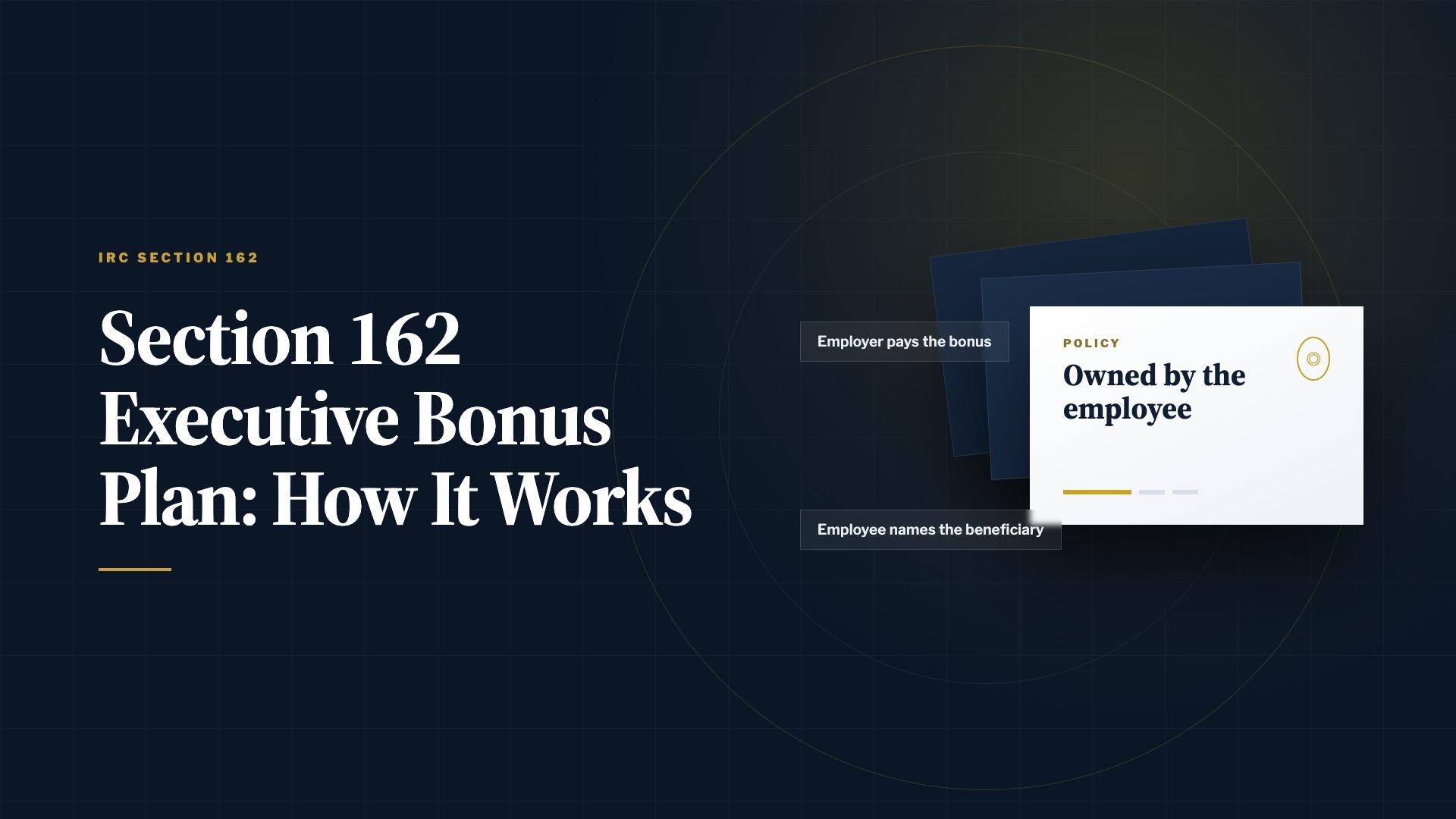
An executive bonus plan works like this: the employer picks a key executive, that executive buys a permanent life insurance policy on their own life, and the company pays a bonus equal to the premium.
The executive owns the policy outright. They name the beneficiary and keep the policy if they leave the company. That portability is part of the appeal for the employee.
On the tax side:
- The business deducts the bonus as compensation under IRC Section 162(a)(1), provided it is reasonable pay for services actually rendered
- The executive reports the bonus as taxable wages on Form W-2, same as other compensation
- The deduction is not automatic—Treasury Regulation 1.162-7 requires the payment be reasonable and tied purely to services, not pay in disguise
For privately held and family businesses, the structure has real appeal: the ordinary arrangement usually skips ERISA filing, and it can be running in weeks rather than months.
Why Business Owners Use Them
Owners use these plans to reward key people and encourage them to stay—without the design burden of deferred compensation.
- Cover only the people who matter, such as the VP of Sales or the CFO you can’t afford to lose—no 401(k)-style whole-staff mandate
- Create simpler “golden handcuffs,” especially with a restrictive endorsement (more on that below)
- Avoid ERISA filing on the ordinary arrangement and stand the plan up in weeks, not months
- Leave policy ownership with the executive, including beneficiary control and full portability if they leave
Executive Bonus Plan Structures: Single Bonus vs. Double Bonus vs. Restrictive Endorsement
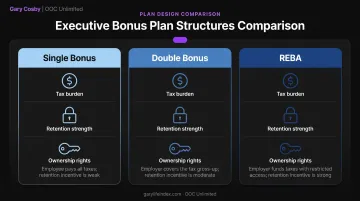
Three structural variations dominate how these plans get built. Each shifts who bears the tax cost and how much retention leverage the employer keeps.
Single Bonus
The employer pays a bonus equal to the insurance premium. Nothing more. The executive receives that bonus as taxable income and owes tax on it out of pocket, typically from other income or by reducing the net amount that actually goes toward the policy.
Double Bonus (Grossed-Up)
Here, the employer adds a second, smaller bonus specifically to cover the tax bill created by the first one. Prudential's business strategies materials describe this gross-up as intended to leave the executive's take-home benefit intact, rather than eroded by taxes.
There's no fixed universal formula for this. Because the bonus is ordinary wage income subject to payroll tax and withholding, the actual gross-up amount depends on the executive's tax bracket and the specifics of that year's compensation. Any advisor quoting a flat "2x" rule is oversimplifying.
Example: A business owner funds a $20,000 annual premium for a key VP. As a single bonus, the VP pays tax on that $20,000 out of pocket. As a double bonus, the company adds enough extra compensation so the tax hit doesn't reduce the VP's net benefit.
Restricted Executive Bonus Arrangement (REBA)
A REBA adds a restrictive endorsement to the policy. The executive still owns it and keeps beneficiary rights, but they can't access cash value, take loans, or change beneficiaries until a vesting condition is met, often a set number of years of service.
This is where the retention hook gets real teeth. The executive has skin in the game but can't cash out early.
| Structure | Who pays the tax | Retention lever |
|---|---|---|
| Single bonus | Executive | Minimal |
| Double bonus | Employer (via gross-up) | Minimal |
| REBA | Either | Strong |
What Is a Typical Executive Bonus? (Bonus Sizing)
In a Section 162 plan, the bonus is usually equal to the annual life insurance premium the business agrees to fund. There is no universal dollar amount or salary percentage that fits every company.
Why the 70/30 split doesn’t apply: You may have seen a 70/30 figure in executive pay design. That benchmark comes from general pay-for-performance work, where WorldatWork cites a 70%/30% base-to-variable mix as one common salary-versus-bonus structure.
That mix is a different concept from Section 162 funding. In a 162 plan, the “bonus” is the insurance premium itself—not a performance-weighted split between company and individual metrics.
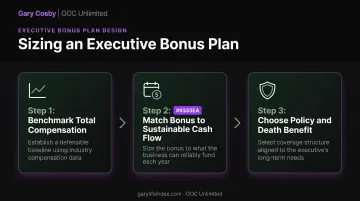
How to size a plan instead:
- Benchmark against the executive’s total compensation package, not a generic percentage
- Match the bonus to cash flow the company can sustain every year—this is a recurring cost
- Choose policy type and death benefit based on that executive’s age, health, and retention goal
For example, an owner who wants to keep a key manager long term might size the annual bonus to a premium the business can fund comfortably for 10+ years, then select a permanent policy that fits underwriting and the desired death benefit—rather than picking a round percentage of salary and backing into coverage.
Tax and Legal Considerations Business Owners Should Know
A few rules govern how these plans actually function, and getting them wrong creates problems later.
- Deductibility isn't automatic. The bonus must be reasonable compensation for services, not a disguised dividend or a workaround for other tax treatment.
- The executive owes tax in the year paid. The bonus counts as W-2 wages subject to standard payroll tax and withholding.
- ERISA exemption has limits. Selective participation alone does not blanket-exempt a plan from ERISA.
The top-hat exclusion under ERISA Section 201 applies to unfunded deferred compensation plans for a select group of management or highly compensated employees. Qualifying plans may still need to file an alternative report with the Department of Labor within 120 days.
Because of this, work with a CPA and attorney to draft the bonus agreement and any restrictive endorsement language. Improper structuring, such as unclear compensation intent or missing plan documentation, can create unintended tax exposure.
Policy choice sits inside those same constraints. Term life is cheaper but builds no cash value, while permanent policies like Indexed Universal Life (IUL) or whole life accumulate value the executive can eventually access, subject to REBA restrictions if applicable. A licensed insurance professional should structure that piece alongside the CPA and attorney. At GFI × Team OOC, the focus is getting the insurance component right within that broader advisory team.
Pros and Cons for Business Owners
Pros:
- Simpler to set up than formal deferred compensation plans
- Tax-deductible to the business as a compensation expense
- No IRS approval process or complex government filing for a standard arrangement
- Flexible design that lets you vary bonus amounts and participants as needed
- Effective for retaining key non-owner talent without diluting equity
Cons:
- Bonus counts as taxable income to the executive in the year it's paid
- No true vesting unless you add a restrictive endorsement
- Cost recurs every year the plan runs, which affects cash flow planning
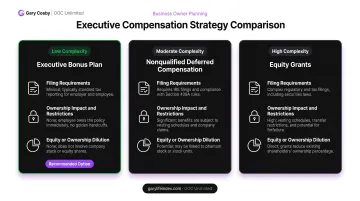
How it compares: Nonqualified deferred comp plans involve more documentation and, if structured as a top-hat plan, potential DOL filing requirements. Equity grants dilute ownership and carry their own valuation complexities. For most closely held companies, an executive bonus plan remains the lowest-complexity option.
Getting Started: Structuring a Plan That Fits Your Business
Before signing anything, walk through these steps:
- Identify which executives justify the cost. Not every key employee needs this. Focus on the people whose departure would genuinely hurt the business.
- Decide single vs. double bonus. This comes down to how much of the executive's tax burden you're willing to absorb.
- Decide whether a REBA fits. If retention is the priority, a vesting restriction adds real leverage.
- Bring in a licensed insurance professional early. Policy selection, whether IUL, whole life, or another permanent product, affects both plan cost and long-term value to the executive.
GFI × Team OOC works alongside business owners' CPAs and attorneys to structure the insurance component of these plans, while the legal and tax framework stays in the hands of your existing advisors.
Frequently Asked Questions
What are executive bonus plans?
Executive bonus plans, or Section 162 plans, let a business pay life insurance premiums for a key employee as a tax-deductible bonus. The executive owns the policy and reports the bonus as taxable income.
What is a typical executive bonus?
Bonus sizing varies by role, company, and cash flow. It's usually set as a percentage of salary or matched to the insurance premium the business agrees to fund.
What does a 70/30 bonus structure mean?
This usually means a compensation split weighted toward company performance (about 70%) versus individual performance (about 30%). It is separate from Section 162 premium-funding bonuses.
Are executive bonus plan premiums tax-deductible for the business?
Yes, premiums paid as bonuses are deductible as a compensation expense under Section 162(a)(1), provided they qualify as reasonable compensation. They're taxable income to the executive.
Can an executive bonus plan be used for just one key employee?
Yes. Selective participation is allowed since these plans generally fall outside ERISA nondiscrimination testing that applies to qualified retirement plans.
How do I decide between a single bonus and double bonus arrangement?
It depends on whether the business wants to also cover the executive's tax liability on the bonus. A double bonus adds a gross-up payment; a single bonus leaves that cost with the executive.