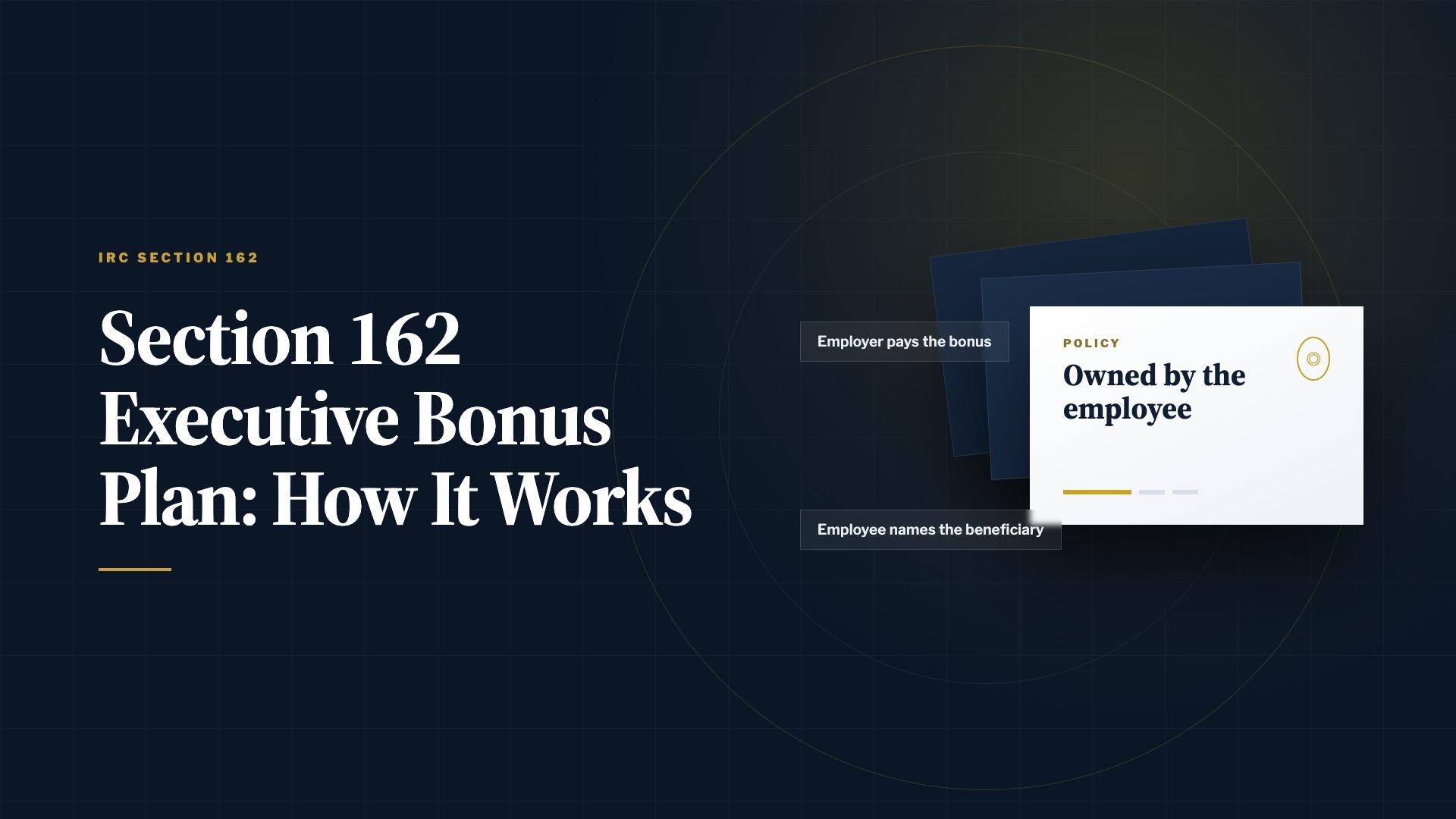
This is where a Section 162 executive bonus plan comes in. Many business owners struggle with finding a benefit that's selective, flexible, and simple to administer. A 162 plan does exactly that, and Indexed Universal Life (IUL) insurance is one of the funding vehicles owners consider for it.
This article breaks down how IUL "wrapped" inside a 162 plan actually works, where it shines, where it can fall short, and what to check before you sign anything.
Key Takeaways
- Section 162 plans reward select key employees with employer-paid bonuses that fund life insurance they own
- IUL offers flexible premiums and index-linked growth, but cash value isn't guaranteed like whole life
- Double-bonus and REBA designs can erase the executive's tax cost and add retention hooks
- Involve a licensed insurance professional, your CPA, and attorney before you implement
What Is a Section 162 Plan and How Does IUL Fit In?
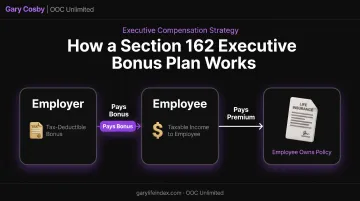
A Section 162 executive bonus plan is refreshingly simple compared to most executive comp tools. The employer pays a bonus to a key employee. That employee uses the bonus to pay premiums on a life insurance policy they personally own.
No trust required. No plan document filed with the Department of Labor. No nondiscrimination testing.
Under IRC Section 162, the employer can deduct the bonus as reasonable compensation for services actually rendered, the same way it deducts salary. The employee reports the bonus as taxable income in the year it's received, and the business takes its deduction in that same year.
Why IUL specifically appeals to some business owners:
- Flexible premiums you can adjust year to year
- Cash value growth tied to a market index, tax-deferred
- Adjustable death benefit as needs change
- Living benefits that can later supplement retirement income
Where IUL Differs from Whole Life
Unlike whole life, IUL cash value is not guaranteed. Growth depends on index performance within caps, floors, and participation rates set by the carrier, and internal policy costs reduce that growth each year. Guardian's IUL breakdown notes that a floor (often 0%) protects against negative index years, while a cap limits how much upside you capture.
Ownership is the other structural point business owners need clear: the employee owns the policy, not the company. The employee controls the beneficiary designation and, over time, access to the cash value, subject to any restrictions built into the plan.
Premium size has no universal benchmark. It turns on face amount, the employee's compensation, and the retention benefit you want the plan to create.
How the "Wrap": Double Bonus and REBA Structures Work with IUL
A plain executive bonus plan has one drawback: the bonus is taxable to the employee, so they're paying taxes on money they never really see in their pocket. That's where two add-on structures come in.
The Double Bonus
A double bonus arrangement covers the premium and an additional amount to offset the employee's tax liability on the whole bonus. The result: the benefit costs the executive nothing out of pocket. Here's a simplified hypothetical to illustrate the math:
- Employer wants to fund a $20,000 annual IUL premium
- Employee is in a 32% tax bracket
- Employer grosses up the bonus so the after-tax amount still covers the $20,000 premium
- That gross-up bonus works out to roughly $29,400 total, deductible in full by the business as compensation The exact multiplier depends on the employee's actual bracket and whether state income tax applies, so this is illustrative only, not a formula to copy blindly.
Adding a REBA
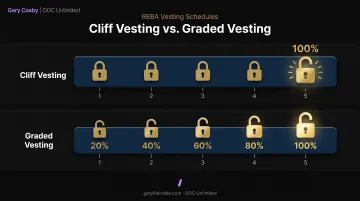
A Restricted Executive Bonus Arrangement (REBA) layers a restrictive endorsement onto the policy. Even though the employee technically owns it, they can't access cash value, take loans, or change beneficiaries until they hit a specified employment milestone. This creates the "golden handcuffs" effect: leave early, and the executive forfeits access to the benefit they were counting on. Plans typically use one of two vesting styles:
- Cliff vesting: All restrictions lift at once (for example, after five years)
- Graded vesting: A percentage of access unlocks each year There is no industry-standard schedule. You build it around your retention goals. To size the bonus, start with the target premium, factor in the employee's tax bracket for the gross-up, then land on the net benefit you want to deliver. Because IUL premiums can flex from year to year, you also have more room to scale the bonus up or down with company performance than you would with a fixed whole life premium.
IUL vs. Whole Life: Which Fits Better in a 162 Plan?
Both products work in a 162 plan. The right choice depends on what you and your key employee value more: certainty or upside potential.
| Factor | IUL | Whole Life |
|---|---|---|
| Premiums | Flexible, can adjust | Fixed and level |
| Cash value growth | Index-linked, subject to caps/floors | Guaranteed minimum, possible dividends |
| Predictability | Lower | Higher |
| Growth ceiling | Higher potential, capped | Steadier, dividend-based |
MassMutual notes that whole life policies offer guaranteed cash value growth, with dividends as a possible (but not guaranteed) bonus on top. IUL trades that certainty for the possibility of stronger growth in good index years.
IUL tends to suit:
- Younger executives with a longer time horizon before they need the cash value
- Businesses that want funding flexibility if cash flow gets tight some years
Whole life tends to suit:
- Owners who want certainty about what the executive will have at vesting
- Situations where predictability matters more than upside
Benefits and Risks of Using IUL in a 162 Plan
The Upside
- Flexible funding. You can dial contributions up or down if a tough year hits your cash flow
- Tax-free death benefit. Proceeds pass to the executive's beneficiaries income tax-free
- Tax-deferred growth. Cash value accumulates without annual tax drag
The Risk You Can't Ignore
Illustrated projections are not promises. Carriers can and do change cap rates and participation rates over time.
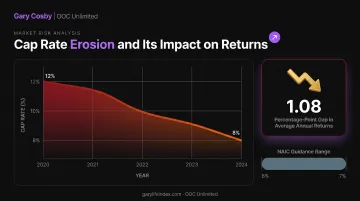
A December 2025 analysis from InsuranceNewsNet modeled a policy starting at a 0% floor/12% cap that eroded to an 8% cap over time. That cap difference alone created a 1.08 percentage-point gap in average annual returns.
That same analysis, using a 75-year hypothetical with a 0% floor and 10% cap, found the index hit the floor or cap in 61 out of 75 years. Caps and floors do most of the work in determining real-world outcomes, far more than most illustrations suggest at the point of sale.
What this means practically: if a policy is underfunded, or a carrier later trims its cap, the executive's projected retirement supplement at vesting may fall short of the original illustration. Regulators have taken notice. Updated NAIC guidance has pushed some illustrated IUL projections down toward the 6%–7% range, below the double-digit figures common in older sales materials.
Steps to Implement an IUL-Funded 162 Plan for Your Business
- Identify the right employees. Section 162 plans skip ERISA nondiscrimination testing, so you can select participants freely. Focus on people whose departure would genuinely hurt the business.
- Compare carriers and policy designs. Cap rate histories, participation rates, and internal costs vary. A licensed insurance professional can walk through options across multiple carriers rather than pushing one product.
- Decide on double bonus and/or REBA. If retention is your main goal, a REBA vesting structure adds teeth. If simplicity matters more, a straightforward single or double bonus may be enough.
- Bring in your CPA and attorney. They'll confirm the bonus qualifies as reasonable compensation and draft the formal plan agreement and restrictive endorsement language.
- Finalize underwriting and paperwork. The employee applies for the policy directly as the owner. Once it's approved, the business sets up the bonus payments and any REBA endorsement.
Gary Cosby Jr., licensed in all 50 states, and the team at OOC Unlimited help business owners with the insurance-funding side of these arrangements. They compare carriers, explain IUL mechanics, and coordinate with your CPA and attorney on the tax and legal pieces.
Frequently Asked Questions
How is a bonus calculated in life insurance-funded plans?
The bonus typically equals the annual premium. In a double bonus design, you add an extra amount to cover the executive's income tax on the total bonus, so the net cost to the employee is zero.
Can a business owner participate in their own 162 plan?
It depends on entity type. C-corp employee-owners often can participate; S-corp owners and sole proprietors face tighter limits. Confirm with your tax advisor before assuming you qualify.
What happens to the IUL policy if the executive leaves the company?
Since the executive owns the policy, it goes with them when they leave. If a Restricted Executive Bonus Arrangement (REBA) is in place, early departure may restrict access to the cash value.
Is an IUL-funded executive bonus plan tax deductible for the business?
Generally yes, bonus payments are deductible as an ordinary business expense under Section 162, as long as total compensation stays within "reasonable" limits.
How does an IUL 162 plan differ from a whole life 162 plan?
IUL offers flexible premiums and index-linked growth potential, but no guarantees. Whole life offers fixed premiums and guaranteed cash value growth, with less upside.
Do I need an attorney or CPA to set up a 162 plan?
A licensed agent can handle the insurance piece, but tax treatment, reasonable-compensation documentation, and the formal plan agreement should involve your CPA and attorney.